★★★★★
“Madison Pest Control Experts provided excellent stink bug control services. They were prompt, professional, and effectively eliminated the infestation in my home.”
JM
Jessica M.Homeowner, Waunakee
✓ Verified
Madison Pest Control Experts with more than 15 years of experience offers expert stink bug control for homeowners and businesses throughout Madison, Wisconsin and greater Dane County. We stop stink bug invasions before they get inside, and we eliminate populations that have already overwintered in your walls, attic, or living spaces.
Stink bugs are one of the most frustrating fall pest problems in Madison. They do not bite, sting, or damage your structure, but they invade in large numbers, release a distinctly unpleasant odor when disturbed or crushed, and once they are inside your walls they are genuinely difficult to remove without the right approach. If you have dealt with them before, you know how quickly a small number of stink bugs on the outside of your home can become hundreds crawling across your windows by February.
We offer same-day and next-day scheduling throughout Madison and Dane County. Our quotes are upfront, our methods are family-safe, and our work is backed by a satisfaction guarantee.
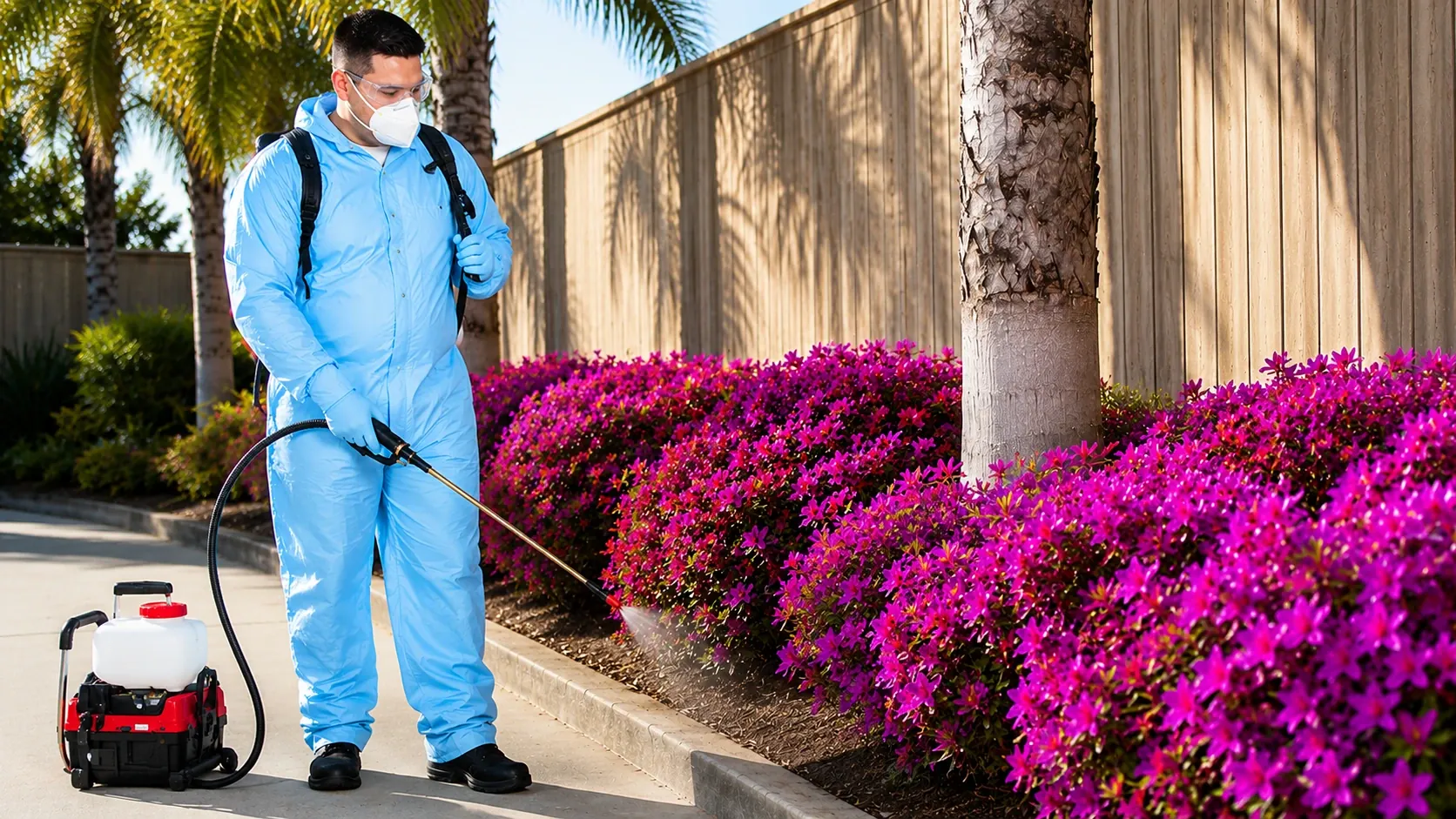
Madison's extensive parks, tree canopy, and green corridors create excellent habitat for stink bugs. They feed on a wide range of plants including fruit trees, ornamental trees, vegetable gardens, and native vegetation, all of which are well represented in Madison's residential landscape. Properties in neighborhoods with large deciduous trees, mature landscaping, and abundant plant diversity see the highest stink bug pressure because these areas provide extensive summer feeding grounds close to structures the bugs will use for overwintering. Areas near Madison's parks and green corridors adjacent to the lakes and natural areas also sustain larger outdoor stink bug populations that migrate toward structures in fall. The older housing stock found throughout the isthmus neighborhoods and near the UW-Madison campus is particularly vulnerable to stink bug entry. Aging soffits, deteriorated weatherstripping, open weep holes, gaps around window and door frames, and utility penetrations that have never been properly sealed provide numerous access points that stink bugs locate using temperature and light cues as cooler weather arrives in September.
The critical window for stink bug control is September and early October, before populations begin aggregating on your exterior walls. Once stink bugs start moving indoors en masse, your options narrow significantly. Treating them after they are already inside wall voids is far less effective than a well-timed exterior treatment that intercepts them before entry. Every year we hear from homeowners who noticed a handful of stink bugs in September and did nothing, then spent February and March dealing with dozens emerging from wall voids as the structure warmed up. If you are seeing stink bugs on the outside of your home in September, that is the moment to act.
If you are seeing stink bugs on the outside of your home in fall, they are already scouting for entry points. If you are seeing them indoors in late winter, they have been in your walls since October and are responding to warmth.
Large numbers of stink bugs gathering on sunny south or west-facing exterior walls during September and October are one of the earliest signs of an infestation.
Stink bugs cluster around windows, doors, soffits, vents, and utility openings as they search for ways to enter your home before winter.
Seeing stink bugs around windows, ceilings, or light fixtures from late winter through spring often indicates they have overwintered inside your walls or attic.
A faint cilantro-like odor or finding numerous stink bugs in attics, wall voids, or behind outlet covers suggests an established indoor infestation.
If you are seeing stink bugs on the outside of your home in fall, they are already scouting for entry points. If you are seeing them indoors in late winter, they have been in your walls since October and are responding to warmth.
The stink bug season in Madison effectively begins in September. As temperatures start to drop, stink bugs that have been feeding outdoors through summer begin actively seeking overwintering sites. South and west-facing exterior walls that absorb the most daytime sun heat up during the day and attract large numbers of bugs using warmth and light as directional cues. This is when you will see them massing on the outside of your home. September is also the most effective window for exterior perimeter treatment.
By October, stink bugs that have been aggregating on exterior surfaces are actively pushing through any available gap into wall voids, attic spaces, and other sheltered areas inside the structure. Entry points include gaps around window and door frames, utility penetrations, soffit vents, and any crack in the building envelope they can locate. Once inside, they settle into dormancy as temperatures continue to drop.
Through the coldest months, stink bugs inside your walls and attic are largely inactive. You may see occasional individuals near light sources or in warmer parts of the structure, but the bulk of the overwintering population stays dormant. This is the most difficult period to treat effectively because the population is dispersed throughout inaccessible areas.
As the structure warms in February and March, overwintering stink bugs become active again and begin moving toward light sources. This is when homeowners find them crawling across windows, emerging from behind outlet covers, and appearing in living areas. What looks like a new invasion is actually the emergence of a population that entered the previous fall. The solution is a proper fall program the following September.
We begin with a thorough inspection of your home's exterior and interior to identify stink bug activity, common entry points, and areas where the insects are gathering or overwintering. This allows us to recommend the most effective treatment plan for your property.
Our technicians apply a residual treatment to exterior walls, foundations, soffits, window and door frames, and other areas where stink bugs gather before entering your home. When applied before peak fall activity, this protective barrier significantly reduces the number of bugs that make their way indoors.
To provide longer-lasting protection, we identify and recommend sealing common entry points such as gaps around windows, doors, utility penetrations, vents, siding, and foundation openings. Combining exclusion with exterior treatment offers the most effective defense against future infestations.
If stink bugs have already entered your home, we remove accessible insects and apply targeted treatments in areas where they are concentrated, such as attics, crawl spaces, and other appropriate locations. Our goal is to reduce existing populations while minimizing disruption inside your home.
We use an Integrated Pest Management (IPM) approach that combines exterior treatments, exclusion techniques, and targeted control methods for lasting results. We also provide practical prevention tips and recommend seasonal treatments to help keep stink bugs from returning.
The brown marmorated stink bug is an invasive species originally from East Asia that has spread widely across the United States since the late 1990s. It is now established throughout Wisconsin, including Dane County and the greater Madison area.
Adults are roughly 14 to 17mm long with a shield-shaped body and brown marbled patterning. They get their name from scent glands that release a strong, cilantro-like odor when the insect is threatened or crushed. That is why swatting or vacuuming them carelessly releases the smell into your living space, and why removal technique matters.
Stink bugs do not reproduce indoors and they do not damage your structure. They enter homes in fall to overwinter, go dormant through winter, and emerge in late winter and spring when indoor temperatures rise. The problem is the sheer number that can accumulate inside a structure over a winter if entry is not prevented in fall.
Purpose-built equipment, used by trained technicians — so the job is done accurately the first time.
Used for applying targeted insecticides effectively in areas where stink bugs are prevalent.
These traps attract and capture stink bugs, reducing their population in your home.
A fogger disperses insecticide in a fine mist, ensuring thorough coverage in hard-to-reach areas.
This device emits sound waves that deter stink bugs from entering your home.
“Madison Pest Control Experts provided excellent stink bug control services. They were prompt, professional, and effectively eliminated the infestation in my home.”
Jessica M.Homeowner, Waunakee
✓ Verified“Their team handled a serious stink bug issue in our apartment complex. The results were impressive, and our residents are now pest-free!”
Tom R.Property Manager, Madison
✓ Verified“I was worried about stink bugs ruining my garden. Their inspection and treatment plan worked perfectly, and I couldn't be happier!”
Linda K.Homeowner, Fitchburg
✓ VerifiedWhat you are seeing is aggregation behavior. As temperatures drop in September and October, stink bugs begin seeking overwintering sites and use warmth, light, and scent cues to locate structures. South and west-facing walls that absorb the most sun attract large numbers of bugs that are essentially queuing up to find a gap to enter through. This typically begins in mid-September in the Madison area and peaks in October. A professional exterior perimeter treatment applied before this aggregation begins is the most effective intervention.
Complete permanent elimination is not realistic because stink bug populations in the surrounding environment are the source of the annual pressure. What you can control is how many get into your structure. A combination of a properly timed annual fall exterior treatment and thorough exclusion work on the primary entry points of your home will consistently reduce the number that make it inside to a manageable level each year. The exclusion work is the most durable part of the solution because sealed gaps do not need to be re-sealed every year.
They have been in your wall voids and attic spaces since October, overwintering in a dormant state. As the structure warms in late winter, they become active again and move toward light sources, which is why you find them at windows and light fixtures. What you are seeing in February and March is the emergence of a population that entered your home the previous fall. The solution for next year is a fall exterior treatment in September combined with sealing the entry points they used.
Stink bugs do not bite, sting, or damage your structure. They do not breed indoors, contaminate food, or transmit disease. Their only real impact is the nuisance of their numbers and the odor they release when disturbed or crushed. That said, large overwintering populations in wall voids and attic spaces can attract secondary pests that feed on dead insects, which is a reason to address a significant stink bug presence rather than ignore it.
Don't let stink bugs take over your home. Contact us for reliable and effective stink bug control in Madison. Our team is ready to help!
Request a Quote +1 (608) 817-1107 →If you have any questions or need pest control services, feel free to reach out. Our team is available to assist you with prompt responses and expert advice.