Expert solutions for termite infestations in Madison.

Termite Control Experts in Madison, WI


Madison Pest Control Experts offers termite inspection, treatment, and prevention services for homeowners and businesses throughout Madison, Wisconsin and Dane County. Whether you have found mud tubes along your foundation, noticed soft spots in your flooring, or want a professional inspection before buying a property, we are here to help.

We are locally owned and operated, so we understand Madison's housing stock, local soil conditions, and the pest pressures specific to this area. Our licensed technicians use professional inspection methods and detection tools to identify termite activity and conditions that increase risk before more serious damage occurs.

Fast online booking

Request service today

Tell us what is happening. A local dispatcher will confirm your visit shortly.

No spam. No obligation. Just practical help.
Thanks — we'll call shortly to confirm your visit.
Termite Control
Careful work. Honest options.
About this service

Why Termites Are a Concern in Madison and Dane County


Wisconsin is home to the Eastern Subterranean Termite, the most widely distributed termite species in North America and the primary species found in Madison and Dane County. Colonies can number in the hundreds of thousands and forage through soil into structures in search of wood framing, flooring, trim, and paper. Madison's mix of older homes near the isthmus and the University of Wisconsin-Madison campus, along with newer construction on former agricultural land in Sun Prairie, Fitchburg, and DeForest, creates consistent termite pressure across the city.

Basements, crawl spaces, and attached garages provide the dark, moisture-adjacent environments subterranean termites prefer, and wood framing near the sill plate is among the most commonly affected areas we find during Madison inspections. Older homes with wood-to-soil contact, aging foundation seals, and mature landscaping close to the structure tend to carry more risk, while newer construction on former agricultural land can attract colonies during their establishment phase, drawn to soil disturbance and leftover wood debris from building.


An Eastern Subterranean Termite colony is organized into three castes. Workers make up most of the colony, feed around the clock, and are the reason damage can accumulate quickly with no visible surface signs. Soldiers have large, elongated brown heads and defend the colony, and their presence is a strong indicator of active infestation. Swarmers are the winged reproductives responsible for starting new colonies, and in Wisconsin they typically appear in spring after rain events; discarded wings near windowsills, doors, or light fixtures are one of the most recognizable early warning signs, though swarmers are sometimes mistaken for flying ants.

Subterranean termites build mud tubes to travel between their underground colony and the wood they are feeding on while maintaining the moisture and darkness they need. These pencil-width tubes typically run along foundation walls, sill plates, and basement framing. Finding one does not always mean termites are active inside it, but it confirms a colony is or has been using that route and warrants a thorough inspection.
Signs of a Termite Infestation

Termites are often called silent destroyers because damage can accumulate for months or years before it becomes visible. Watch for:

  • Mud tubes: pencil-width brown tubes running along foundation walls, sill plates, or basement framing, sometimes at angles
  • Hollow-sounding or soft wood: wood that sounds hollow or papery when tapped, or feels spongy and gives under light pressure
  • Discarded swarmer wings: small translucent wings near windowsills, doors, or light fixtures, especially after spring rain
  • Buckling or blistering paint and flooring: moisture building up behind walls or beneath flooring, often mistaken for water damage
  • Frass: fine, sawdust-like droppings sometimes left near feeding sites by drywood termites, less common in Wisconsin
  • Tight-fitting doors and windows: frames that warp or shift as termites feed nearby, a less specific but still useful sign
  • Visible wood damage: cracked, blistered, or unusually thin wood indicating feeding beneath the surface

How it works

Our Termite Control Process

01

Exterior Inspection

We inspect the full foundation perimeter and wood-to-soil contact points outside your home, looking for the conditions and entry points that let termites establish themselves.

02

Interior Inspection

Our technicians focus indoors on basements, crawl spaces, sill plates, floor joists, and any areas of moisture damage, using moisture meters, termite probes, and acoustic detection tools to identify activity that isn't visible to the eye.

03

Written Findings Report

You receive a written report with photographs, an assessment of active versus historic activity, and a recommended treatment approach with clear pricing before any work begins. Even without an active infestation, we document conditions that could increase future risk, such as excessive moisture or wood-to-soil contact, and recommend practical steps to reduce them.

04

Customized Treatment Plan

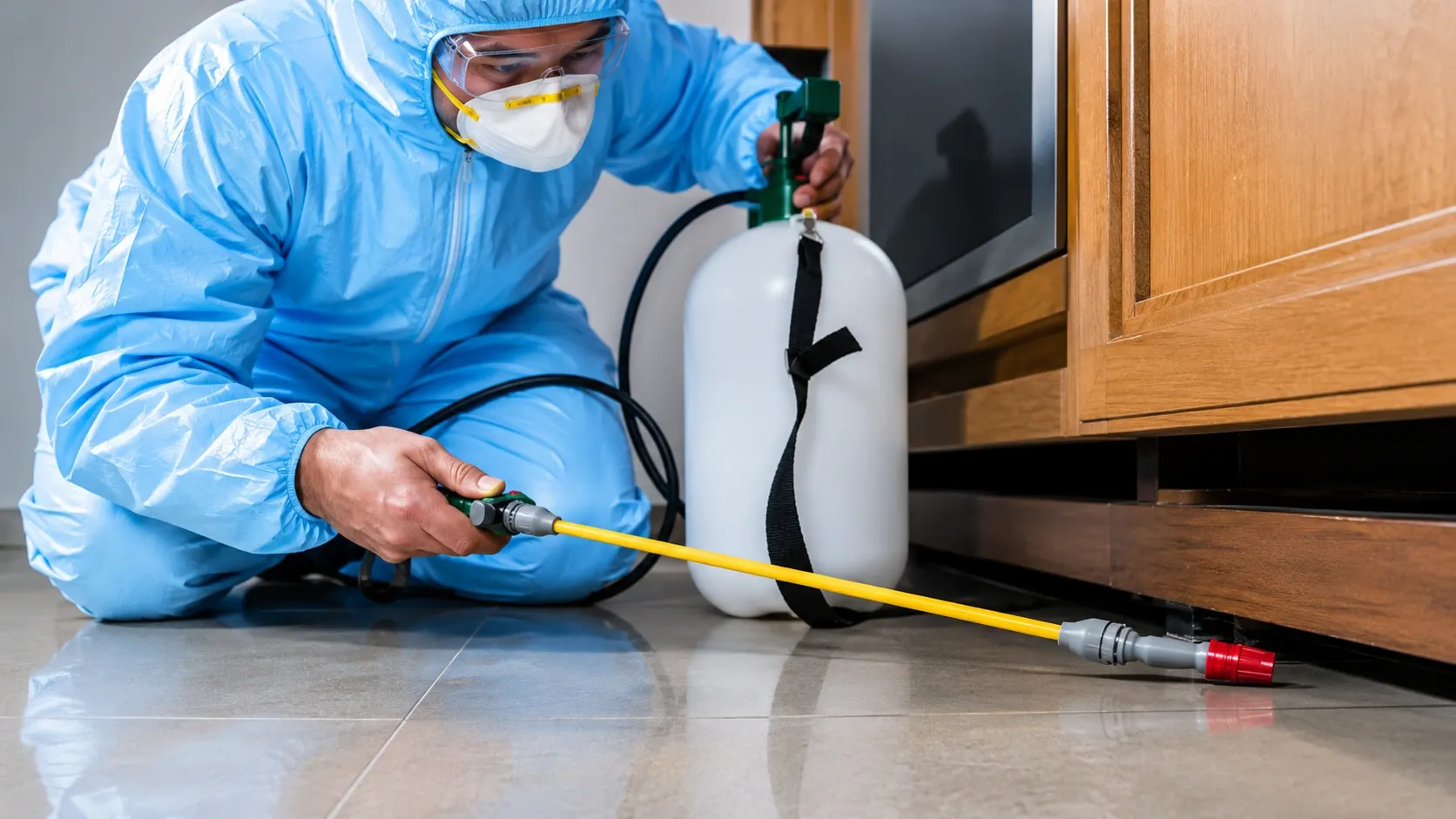
Based on the inspection, we recommend the treatment approach that fits your property: liquid termiticide soil treatment for an established treated zone, termite bait systems for ongoing monitoring, or a combination of both for active, established infestations.

05

Approval and Treatment

Nothing gets started without your understanding and approval of the plan. Once approved, we implement the recommended treatment using methods suited to your property, budget, and goals.

PROBLEMS WITH DIY

Why DIY Termite Control Almost Always Falls Short

Store-bought products treat what you can see, not the colony actually causing the damage. Here's where do-it-yourself approaches consistently fall short.

Ask a pro
01

Colonies extend far beyond the surface

Subterranean colonies can forage 20 feet or more underground across multiple structures, so a surface application doesn't eliminate the colony. It simply redirects foraging to another entry point, often one you haven't identified.

02

Proper application requires a licensed hand

Creating a continuous treated zone takes specific equipment, application rates, and placement patterns. Wisconsin requires licensed applicators to follow label requirements and state pesticide regulations that consumer-grade products can't legally or effectively replicate.

03

Hardware store bait lacks real firepower

Bait systems purchased off the shelf lack the active ingredient concentration and monitoring infrastructure that make professional bait programs effective.

Prevention Tips

Termite prevention tips for Madison properties

Simple maintenance steps homeowners can take to reduce the conditions that attract termites and make early detection easier.

Eliminate wood-to-soil contact

Raise deck posts onto concrete footings, keep at least six inches of clearance between soil and siding, and remove landscape ties from the foundation.

Manage moisture

Fix overflowing gutters, redirect downspouts away from the structure, and correct grading that pools water against the foundation.

Remove debris and seal entry points

Keep firewood, old lumber, and mulch piles away from the structure, and seal foundation cracks and utility penetrations to close off unmonitored entry points.

Schedule annual inspections

Catch mud tubes or moisture damage early, before they have a chance to cause structural harm.

WHY ACTING EARLY MATTERS

The Cost of Waiting on Termite Damage

Termite damage is cumulative and largely invisible until the impact is already serious. Here's what early action protects.

Invisible, cumulative damage

By the time a floor feels soft or a door stops closing properly, damage has often been developing for months or years.

Real financial stakes

Structural repairs to floor systems, wall framing, and support beams can run from several thousand dollars for localized repairs to tens of thousands for more extensive damage, while professional treatment is a fraction of that cost.

Pre-purchase protection

Wisconsin doesn't require a termite inspection as part of a real estate transaction, so a pre-purchase inspection is one of the most valuable steps a buyer can take.

Liability protection for landlords

Documented inspections and treatment records protect landlords from liability in the event of a future dispute.

Why Choose Madison Pest Control Experts

  • 15+ years serving Madison and Dane County: treating properties from century-old isthmus homes to commercial warehouses near the Interstate 90/94 corridor
  • Locally owned and operated: accountable to this community, with people who live and work in the area answering the phone
  • Licensed technicians: current Wisconsin pesticide applicator credentials and ongoing training in termite biology and detection methods
  • Customized treatment plans: based on what the inspection finds, not a standard package or a sales script
  • Family and pet-conscious application methods: treatment timing and product selection chosen with the people and animals in your home in mind
  • Fast local response: without the multi-week waits common with larger national companies routing calls through a dispatch network

Commercial Services

Commercial Termite Control in Madison, WI

Termite activity creates the same structural risks in commercial buildings, with added consequences for business operations, tenant safety, and, in food service or healthcare environments, regulatory standing. We serve office buildings, restaurants, retail properties, warehouses, and multi-family housing across Madison and Dane County, working around your operating schedule with written reports and scheduled monitoring built for lease compliance, real estate transactions, and multi-property portfolios.

Request a Quote +1 (608) 817-1107
Customer reviews

What Our Clients Say About Termite Control

★★★★★
“I had a serious termite problem in my home, and Madison Pest Control Experts handled it with professionalism. They were thorough and explained everything. Highly recommend their services!”
JD

Jane D.Homeowner, Monona

✓ Verified
★★★★★
“The team was prompt and efficient in treating my termite problem. They followed up to ensure everything was okay. I feel much safer in my home now!”
SL

Sarah L.Homeowner, Fitchburg

✓ Verified
Good questions

Frequently Asked Questions

+1 (608) 817-1107 →

Termites have straight antennae, a uniform waist, and two pairs of equal-length wings that break off easily. Carpenter ants have elbowed antennae, a pinched waist, and wings of unequal length. Send us a photo or a sealed sample and we will identify them at no charge before recommending any treatment.

Not necessarily. A mud tube confirms termites have used that route at some point, but it could be old and inactive. Professional inspection is the only reliable way to confirm current activity. Do not delay having it checked, since earlier treatment is always less costly than later treatment.

Wisconsin does not require one, but we strongly recommend it. Termite damage can hide behind walls, under flooring, and in crawl spaces. We provide written inspection reports in the format lenders and real estate transactions require.

Liquid termiticide treatments remain effective in the soil for a number of years, depending on the product, soil conditions, and whether the treated zone is disturbed by excavation. New colonies can eventually establish near a previously treated property, which is why annual inspections are the most reliable way to catch new activity early.

Ready when you are

Get Reliable Termite Control Madison WI Today

Don't let termites compromise your home's safety. Contact us for expert termite control services in Madison. Our licensed team is ready to help.

Request a Quote +1 (608) 817-1107
Request an appointment

Get in Touch with Us

If you have any questions or need pest control services, feel free to reach out. Our team is available to assist you with prompt responses and expert advice.

Request received — our team will be in touch shortly.
Tap to call+1 (608) 817-1107